
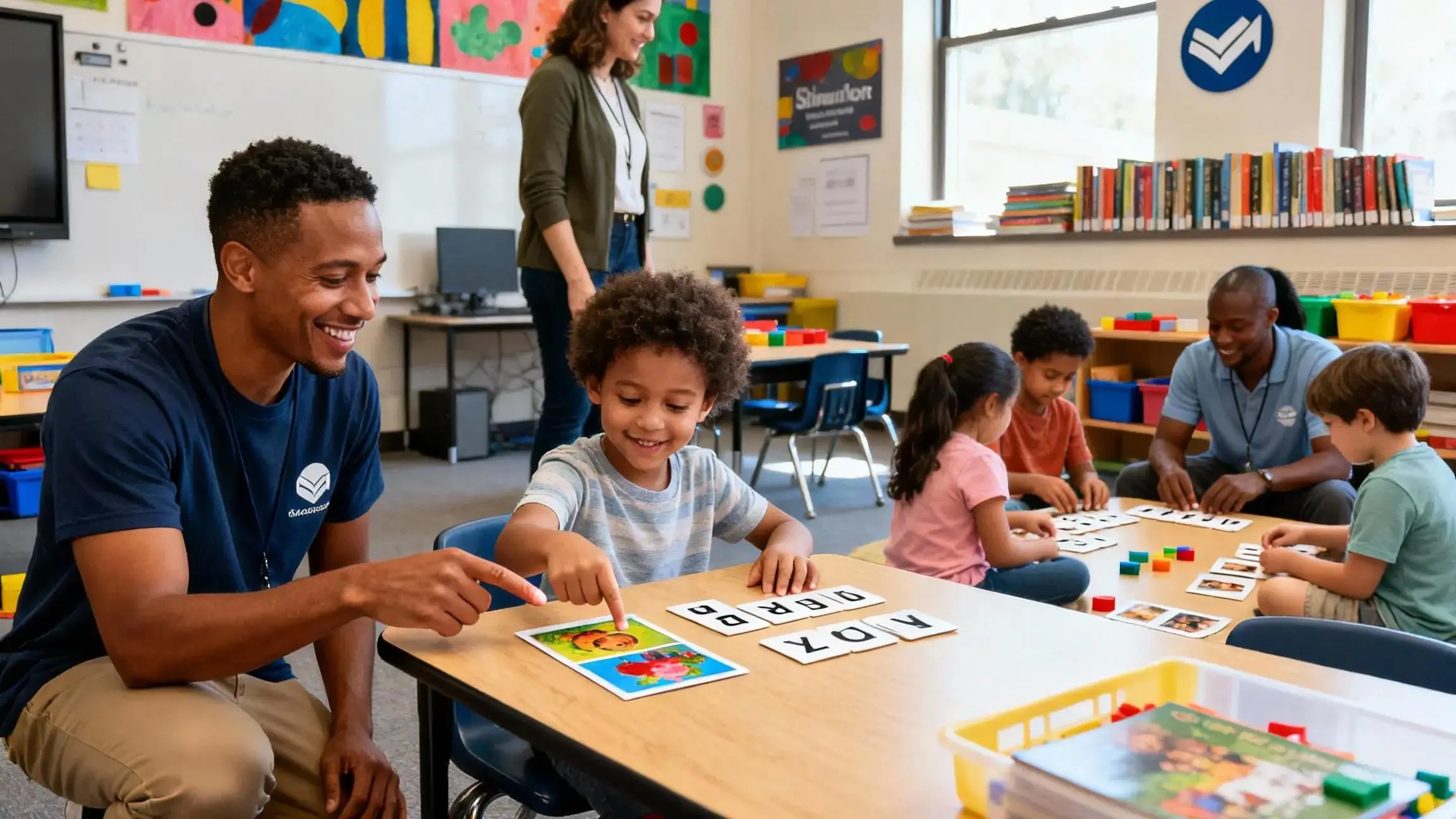
Teaching volunteer jobs give you a direct, practical way to help others learn and grow—whether you want to support a neighbor’s homework, boost early literacy, or teach English online.
We break down nine solutions that let you plug in, build real relationships, and measure your impact on students’ progress.
Every option is designed for volunteers who want hands-on, meaningful involvement in their community or beyond.
1. Schoolreaders Primary School Reading Volunteer
Literacy is power, and giving it to a child changes their life fast. If you want reliable, direct classroom impact, Schoolreaders makes it simple and meaningful. You connect with UK primary schools that need reading mentors now, right in their classrooms.
Why this role works:
- Over 35,000 children each year get one-to-one reading help, not just group lessons. That means every session you deliver targets a real gap and closes it—quickly.
- Early literacy support multiplies opportunity. When you boost reading in primary years, those kids gain better access to the rest of their education for years to come. Schools report sharper progress when volunteers get structured training and use real curriculum.
- The match-up is smart. You’re paired with a school, shown routines, and launched fast. No cold-calling, no solo prep.
Schoolreaders is best for you if:
- You want to use proven systems. Prefer to build real relationships with the same students each week and see your results firsthand.
- You care about evidence-backed outcomes. Programs with frequent, one-on-one sessions deliver three to four months of reading gains on average—backed by real research, no guesswork.
Early literacy interventions work best when you have frequent, focused sessions with kids—predictable, every week, right in their classrooms.
When to choose Schoolreaders
- You have 1–2 hours weekly to give.
- You live near a UK primary school and want classroom experience or to reconnect with education.
- You like knowing your impact will last.
2. Learn To Be Free Online Reading Tutor
Need a volunteer teaching job you can do from home that’s still personal and structured? Learn To Be connects you to students needing reading help with step-by-step, ready-made lessons.
What makes Learn To Be stand out
Learn To Be’s online platform cuts out the chaos. You use a 22-lesson researched reading course with clear steps: phonics, word building, comprehension. Students progress, and you track wins easily.
- Every lesson is prepped for you. No hours spent hunting resources or writing plans.
- It’s all one-on-one. Consistency builds confidence. Kids know you’re on their side week after week.
- Perfect for you if you want flexibility, concrete results, and simple organization.
Who loves this role:
- Newer tutors and busy experts who still want a steady, high-impact routine.
- Anyone eager to follow proven reading science without designing a curriculum from scratch.
Fast facts:
- You’ll use evidence-based, sequenced lessons, shown to boost reading gains by up to 0.37 standard deviations—the same as three to four extra months of learning for each child.
- You get progress tracking and milestone checks, so you (and your learner) always see how far you’ve come.
Clear lesson sequences and student tracking let you focus your time where kids need it most, turning small commitments into big outcomes.
When to choose Learn To Be
- You want a done-for-you curriculum.
- You can do remote sessions and like flexibility.
- You value frequent feedback and seeing real results.
3. Outreach360 Virtual Volunteer English Teacher
You want a challenge. Outreach360 lets you teach English to motivated students in Latin America, fully online, with global reach and real teaching support.
Why Outreach360 hits the mark
No teaching credential? No Spanish? No problem. This program delivers training, daily support, and a structured class experience—your job is to show up and teach.
- You’re part of a team, supported by coaches, not left alone. The organization handles family communication, materials, and tech—so you can focus on impact.
- Every volunteer gets curriculum, guidance, and feedback. This means even first-time teachers deliver real value.
- Program runs in three-month cycles. You get a cohort you can grow with, plus predictable schedules.
Who is this right for?
- You want structure, support, and a bigger-picture mission—like expanding leadership skills as well as language.
- Volunteers who will make teaching part of their weekly life for 12 or more weeks.
Key outcomes:
- Small class sizes mean you see real student progress.
- The whole system is designed for higher-dosage impact: just a couple hours per week, but closely tracked for attendance and achievement.
- Global teamwork keeps you motivated.
Structured, cohort-based programs turn new volunteers into effective teachers quickly—so your time delivers maximum benefit.
4. International Volunteer HQ Teaching Volunteer Abroad Programs
If you want to combine travel with impact, IVHQ offers teaching placements in dozens of countries. Placements support everything from math and French to after-school clubs. Roles match up with the United Nations Sustainable Development Goals.
What you’ll get
- Accommodation, meals, orientation, and full support are built into modest fees. No guesswork, just a clear path from start to finish.
- Both first-time and trained educators find a fit. You can pair with local teachers and help teach during the school day or after hours.
- The emphasis on SDG 4 (Quality Education) means your efforts are feeding into a global movement, not just a short-term fix.
Best for you if:
- You want structure and safety in an unfamiliar country.
- You want impact measured in contributed hours, and alignment with established local initiatives.
The proof:
- Over 285,000 hours have gone into IVHQ education work, according to their own tracking.
- Fee transparency makes it clear your housing, meals, and safety are handled, and funds support local partners—not just admin overhead.
When international programs integrate with local schools, your time lifts outcomes and builds long-term local capacity.
5. Collaborative for Children Early Childhood Classroom Volunteer
Want to get in on the ground floor of a child’s educational journey? Collaborative for Children links you with early learning centers in Greater Houston, serving as a critical extra pair of hands and an inspirational presence.
Why this matters
Early support matters most. Centers focused on the highest program quality create better language, motor, and social outcomes for kids. Family engagement is built-in, not optional.
- You join an improvement-minded team. Volunteers help boost participation in centers aiming for top state and national standards.
- The program is ideal for community members who want regular, hands-on practice with young kids but not necessarily a teaching credential.
Who succeeds here:
- Locals who want to shape the next generation and see kids thrive before grade school.
- Adults eager to make a visible difference in a high-support, low-barrier environment.
Standout features:
- Standardized volunteer onboarding and assignment makes this a seamless entry point.
- You help drive up the quality of the entire center, boosting not just academic but emotional development.
Early childhood volunteering in structured, high-standard centers delivers benefits that last well beyond the toddler years.
6. Head Start Classroom and Family Support Volunteer
Head Start is the gold standard in early education for underserved communities. Volunteers here help with everything from reading stories to supporting family activities and health screenings.
What sets this apart:
- The curriculum is evidence-based and monitored—like Frog Street Press, which aligns with rigorous state standards. That means what you do actually moves the needle.
- Wraparound care is the point. You’ll impact not just learning, but health, nutrition, and emotional development.
- Evidence shows kids in Head Start programs have higher rates of graduation, college attendance, and certification. Volunteers play a direct part in driving these outcomes.
Who fits best:
- Community-minded folks eager to use a few hours weekly supporting children and families, not just academics.
- Volunteers ready to work in regulated, supportive environments with real supervision and feedback.
Immediate benefits:
- You help with classroom language play, screenings, or family activities that support the whole child.
- Every contribution gets tracked, measured, and feeds a comprehensive achievement plan.
Multilayer support in early childhood changes lives—your time in a Head Start center is a long-term investment in student and community success.
7. Community Recreation and Arts Instructor for Youth
If you’d rather lead from the field, not just the classroom, volunteering as a community recreation or arts instructor delivers big returns for youth. These roles fit right inside neighborhood centers, after-school programs, or even local parks.
You aren’t just running games or teaching crafts. You’re building confidence, sparking creativity, and fostering teamwork. Evidence shows kids gain essential social skills, better attendance, and more connection to school when they join structured recreation.
This is the ideal fit if:
- You thrive in hands-on environments and like seeing kids light up during sports, arts, or fitness sessions.
- You want flexibility—volunteer weekly, run a summer camp, or start a weekly club.
Why it stands out
- Activities focus on healthy habits and lifelong skills, not just passing time.
- Standardized role guides help volunteers match duties to their interest and skill level for safer, smoother programs.
- Smaller group sizes (think arts circles or small teams) mean every child gets noticed and supported.
- Youth are more likely to stay engaged and return, making your effort truly add up.
Extracurricular teaching is about more than skills. It’s about giving kids a reason to show up, belong, and keep growing.
8. Teach English Online via TEFL Partner Organizations
Remote volunteering can break barriers for both you and your learners. Teaching English online through TEFL-accredited groups means you bring jobs, study, and connection within reach for students of all backgrounds.
These programs set you up with short TEFL training, classroom resources, and support so you don’t have to figure it all out on your own. Your effort boosts language skills, confidence, and opens doors globally.
Best fit for you when:
- You want to teach from home with flexibility, but need a little guidance at the start.
- You see value in building your own skills—not just helping others, but growing your resume with real teaching experience.
Key strategies
- Training preps you to deliver organized, focused lessons that give learners structure and purpose.
- Group sizes are small, so every minute is quality time.
- Feedback cycles and progress checks help you keep students engaged and moving forward.
TEFL-certified volunteer teaching gives you practical skill-building and lets you make a global impact—without a passport.
9. Neighborhood Homework Club Mentor on Gathr
Nothing brings education closer to home than a neighborhood homework club. With Gathr, you set up or join a local peer-to-peer group for reading, math, or digital skills. Every club forms organically: just neighbors helping neighbors, tracking progress and sharing encouragement.
This is hands-on, street-level teaching. You notice real gaps. You provide regular practice. Families know and trust you because you’re right there, available, and invested.
What makes Gathr’s model work:
- You set the pace—weekly, biweekly, or as needed.
- You choose your focus area, so every session directly addresses someone’s struggle.
- Quick, data-lite tracking lets you spot wins and adjust where needed.
- Flexible, low barrier, and always neighborhood-first.
With Gathr, you connect directly to learners who need your help now. Small, steady efforts become real change—block by block.
How to Choose the Right Teaching Volunteer Job
Picking the right volunteer teaching job isn’t about prestige—it’s about where your commitment meets concrete results. Focus on roles that fit your routine, deliver clear structure, and track real progress.
What matters most:
- Confirm programs offer child protection, clear communication rules, and show how learning gets measured.
- Choose frequency and format that makes you actually show up. Consistency beats grand promises.
- Prefer systems with built-in training or resources over roles where you’re expected to improvise.
Rapid-fire non-negotiables:
- Safe, transparent onboarding
- Ready-to-go curriculum or clear session plans
- Progress tracking, even if basic
- Room to adapt as you spot needs
The best teaching volunteer jobs make it easy for you to start, stick with it, and see results.
Quick Starter Checklist for Teaching Volunteers
Stay motivated and organized from the start with this checklist:
- Define your skill focus: reading, homework help, arts, sports, or digital
- Choose in-person, online, or hybrid
- Get background checked if needed
- Review easy session templates or guides
- Commit to a recurring session weekly or biweekly
Keep your toolkit simple but sharp. For reading, use proven routines. For digital skills, brush up on basic tech.
Tip:
Start small, track a metric or two (like words per minute or task completion), and adjust every month. Celebrate even tiny wins.
Frequently Asked Questions about Teaching Volunteer Jobs
Do I need experience?
Not always. Many roles, especially peer-to-peer or those with structured guides, welcome all skill levels.
How much time does this take?
Most effective: 1–3 hours a week. Some international or high-commitment programs ask for more.
What’s the fastest way to see impact?
Early literacy and regular homework clubs deliver gains in weeks, not months. Consistency is everything.
Small, repeatable sessions get better results than sporadic, heroic efforts.
Looking for a way to get involved in your community?
Check out Gathr — a new app that makes it easy to find volunteer opportunities anywhere.
Find Opportunities →Conclusion
Teaching volunteer jobs show their value when you commit, track progress, and meet learners where they actually are. There’s a role for everyone—from field coaching to block-by-block reading support. At Gathr, we see first-hand how quick, regular check-ins spark academic growth and community connection. Open Gathr, start lending your expertise, and see firsthand how every local lesson adds up to global change.