
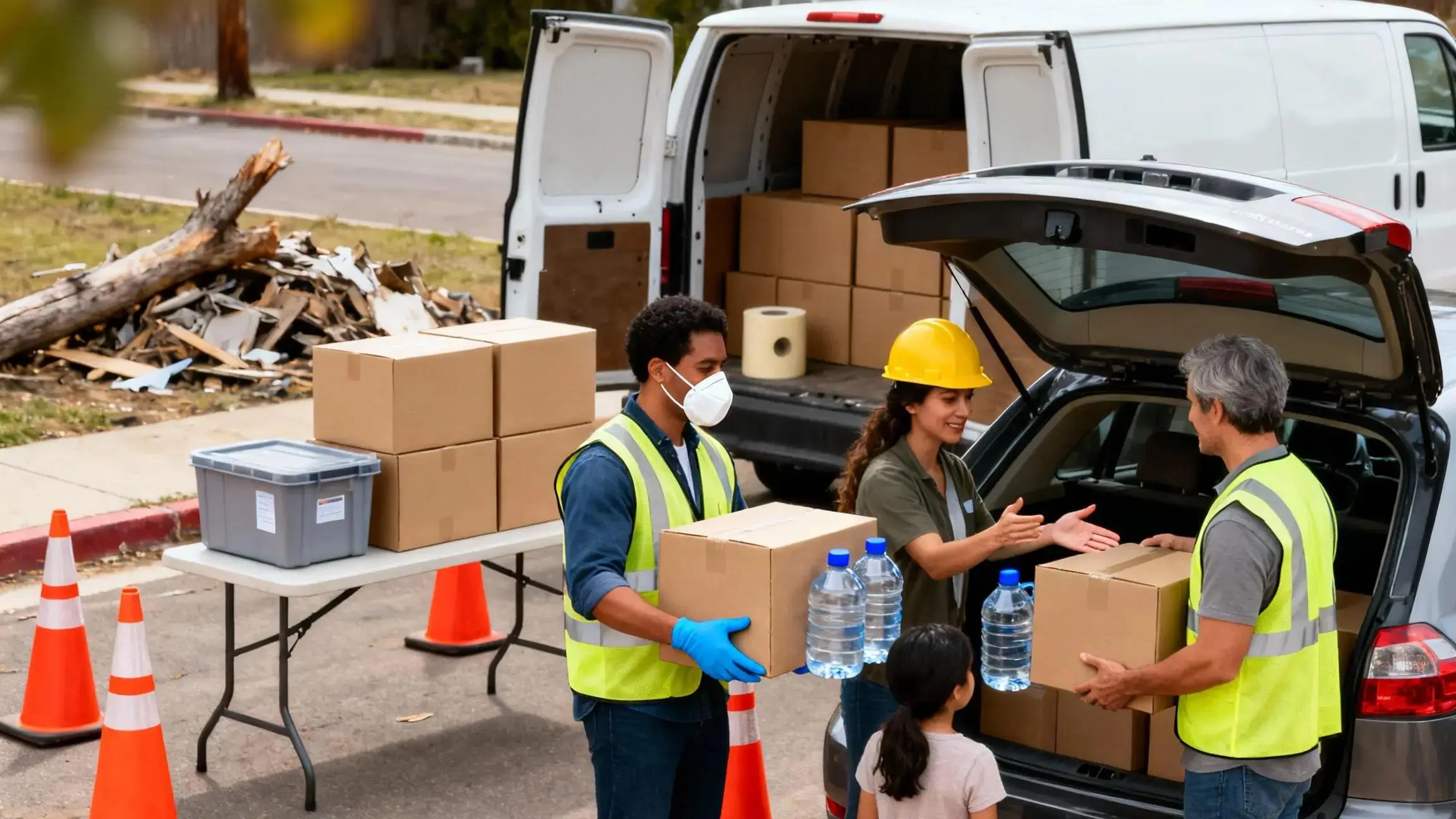
Getting started with volunteering for disaster relief can feel overwhelming—especially when you want to make a real impact but are unsure where to begin.
It’s common to feel uncertain about your skills or how to start offering help in moments of crisis.
To make it easier, we created this practical guide covering:
- What volunteering for disaster relief looks like, from urgent response to long-term support
- How peer-to-peer platforms connect you directly to real people and needs in your area
- Steps for preparing, staying safe, and supporting communities alongside fellow volunteers
Understand What Volunteering for Disaster Relief Involves
Get clear on what disaster relief volunteering means for you, your neighbors, and your community. Every decision you make here shapes real-world impact, so let’s break it down.
Disaster Response Roles That Put You in the Action:
- Immediate Crisis Response
Rapid actions: distributing supplies, setting up shelters, offering first aid. Works best when you want boots-on-the-ground impact and have basic situational awareness. You’ll need to know your limits and always use PPE like helmets, gloves, and sturdy shoes. - Long-Term Recovery
Think debris removal, rebuilding, or supporting information-sharing months after the initial disaster. Great fit for those who want to see their impact in sustained, visible recovery. - Peer-to-Peer vs. Organization-led
Peer-to-peer volunteering (like what Gathr enables) means connecting directly with people who need help, for ultra-responsive, local impact. This is your zone if you value flexibility and direct connection to those affected. - Supporting Roles
Logistics, emotional/psychological care, translation, and information management. Ideal for those who are detail-oriented, skilled at listening, or want to serve from behind the scenes.
Disaster relief is structured but dynamic. Many teams follow the Incident Command System (ICS) — when you join a formal group, expect a chain of command, basic workflows, and standardized forms for tasks and communication. The baseline: Protect yourself first (as taught in CERT), stay organized, and use basic forms to track what you do.
The best volunteers know their strengths and plug into roles—whether fieldwork, coordination, or digital support—that match their skills, readiness, and the needs of the moment.
Identify Your Motivation and Set Intentions
Knowing why you want to help is crucial. Volunteering for disaster relief is physical, emotional, and sometimes heart-wrenching work. You’ll need a purpose to ground you.
Ask yourself: Are you deeply moved after seeing a recent tragedy? Do you want to prove to yourself you can make a difference? Or is building stronger community ties your main pull?
You might start by doubting your skillset or fearing you’ll get in the way. That’s normal. Most peer-driven teams (including those on Gathr) grow through real-world experience. The secret: show up, listen, and keep learning. You’ll build both confidence and capacity as you go.
Quick Readiness Self-Check
- Are you physically ready? You should be able to move debris, stand for hours, and adapt to tough environments.
- Can you handle emotional intensity? Be prepared to witness distress and trauma.
- What’s your availability? Honest self-inventory prevents burnout and keeps your commitments real.
- What skills do you bring? List hard skills (driving, first aid, lifting, languages) and soft skills (empathy, communication, cultural awareness).
Set a short-term goal (like volunteering for a few shifts or completing an intro course) and a learning objective (such as first aid). Picking a clear, short commitment means you’ll stay energized, avoid burnout, and discover your best role.
Explore Different Ways to Volunteer for Disaster Relief
You want to act, but how do you fit in? Disaster relief isn’t one-size-fits-all, and your contribution—big or small—matters.
Where You Can Plug In
- Field Work
Distribute supplies, help with search and rescue, build temporary shelters. This is the best option for those ready for physical tasks and adaptable to fast-changing needs. - Specialized Roles
Offer medical help, translate for displaced families, staff crisis lines, or guide logistics. Choose these if you’re trained in a specific area or want to boost those skills in action. - Remote or Digital
Coordinate evacuations, verify information, support resource mapping, or handle requests through apps. This suits tech-friendly, resourceful volunteers who prefer to assist from home.
Certified programs often place you in clear teams: Operations, Logistics, Planning, or Admin. You might check requests, track supplies, or provide real-time reports. If you’re new, micro-tasks like data entry, donation sorting, or food delivery build your experience and confidence fast.
Peer-to-peer apps like Gathr put you in direct touch with urgent requests and allow you to help in ways that fit your life. No long training windows, just real opportunities to get involved now and scale impact as you grow.
From shelter set-up to translation to digital coordination, disaster volunteering fits every schedule and skill level. There is always a place for willing hands and open minds.
Learn How to Get Started as a Disaster Relief Volunteer
You don’t need years of training to take your first step—just the right game plan. Here’s how to move from zero to ready.
Step-by-Step: Disaster Relief Volunteering Made Easy
- Assess your resources and skills
Clarify your schedule, physical ability, risk tolerance, and any special skills or credentials. Honest self-awareness keeps you, and those you’re helping, safer. - Register on a trusted platform
Create a profile with your info on Gathr for access to immediate, local opportunities. Verification ensures safe, secure connections. - Find the right opportunities
Respond to real-time calls for help—filter by distance, skills needed, or impact type to match your strengths to what’s needed. - Complete basic training (if required)
Quick online courses (like FEMA IS-100 or IS-700) get you ready for on-scene realities. Most field roles also ask for basic PPE and first aid awareness. - Show up and support
Bring ID, a charged phone, basic supplies, and emotional readiness. Communicate with the organizer, confirm your role, and stay flexible—you’ll often swap tasks as needs shift.
Some deployments may have special requirements (background checks, age, or health clearances). Always check what’s needed before heading out.
The biggest leap is the first one: build your profile, do basic prep, and answer your first call to action. Your help is needed now, not someday.
Prepare for Your First Disaster Relief Volunteer Experience
Stepping into disaster relief means stepping into a high-energy, sometimes chaotic environment. The demands are real. So is the impact you can have.
Here’s what you can expect and how to show up strong.
What to Expect on Your First Shift
- Heightened emotion. Events move fast. You may meet people who are fearful, stressed, or grieving. Your presence makes an immediate difference.
- Unpredictable needs. Tasks will shift. Sometimes you’ll distribute supplies, other times you’ll clean up, direct people, or just listen.
- Teamwork is everything. Join up with others, check in, and follow the incident lead. Safety briefings and quick updates keep you focused.
Effective volunteers listen first, then act—with humility, adaptability, and a readiness to help wherever they’re needed most.
Show up Ready: What to Bring and Do
- Government ID and mobile phone
For check-in and coordination. Stay reachable at all times. - Water, snacks, work gloves, and sturdy shoes
You’ll move and lift. Keep yourself fueled. - PPE (mask, goggles), first aid kit, headlamp
Protect yourself in uncertain environments. - Simple documentation kit: notebook, pen
Track tasks, info, names, and needs. - Your questions
Ask supervisors for clarity. Confirm your assignment and chain of command.
Debrief after your shift. Connect with more experienced volunteers or peer supporters if you feel emotionally raw. Scheduling downtime is not optional—it is critical for returning as your best self.
Connect With Others and Coordinate for Greater Impact
You’ll achieve far more working alongside others than going solo. Smart disaster relief depends on strong communication and collective problem-solving.
Use technology to power your impact. With apps like Gathr, you can match real requests to offers instantly—no second-guessing, no lag, no paperwork snags.
Ways to Maximize Your Impact Through Coordination
- Start or join a dedicated chat thread for your team.
Streamlines logistics, reduces confusion, and anchors everyone to a core mission. - Share updates and status reports.
Simple group updates prevent double-work and make sure every task makes a difference. - Map and sort resource requests.
Real-time tracking means nothing slips through the cracks. - Assign one logistics lead for complex events.
Ownership ensures requests are handled, from supply runs to volunteer shifts.
When we connect, coordinate, and communicate—resources get where they’re needed and hope scales fast.
Maintain privacy and safety by sharing only necessary info. Use secure channels for sensitive details and confirm identities, especially for in-person meetups.
Address Common Concerns and Challenges
Every volunteer encounters challenges—doubt, fear, moments when mistakes happen. That’s part of the work. The key is to keep learning, stay resilient, and rely on your community.
Practical Solutions for Common Volunteer Obstacles
- Unsure about a task?
Stay within your training, ask for help, and update your supervisor. No one expects you to know everything. - Worried about burnout or emotional overload?
Use peer support, schedule debriefs, and take real breaks. Watch for signs of compassion fatigue. - Encounter a logistics snag or communication breakdown?
Note the issue, document what happened, and problem-solve as a team. - Facing legal or safety questions?
Read waivers and policies up front. Always check health, age, or background requirements before deployment.
Most successful volunteers treat mistakes as lessons. Log what you learn and bring insights back to future shifts. That’s how you grow from a helper into an experienced leader.
You don’t have to be perfect—you just have to persist, adapt, and support each other.
Take Your First Step: How to Start Volunteering for Disaster Relief Now
It’s easy to wait for the “perfect” time or role. But relief efforts need you now.
Here’s a quick-start checklist to move from interest to impact:
- Research current needs in your area—look for up-to-date requests on Gathr.
- Register with Gathr (https://gathr.gives) for verified opportunities and real-time volunteer matching.
- Complete at least one basic training (FEMA IS-100, first aid, or similar).
- Assemble your emergency volunteer kit.
- Choose a first action—sign up for a micro-task, deliver supplies, or volunteer remotely.
- Log each volunteer experience so you track progress and set goals.
Try this for your first 30 days:
Week 1, register and start your courses.
Week 2, prep your kit.
Week 3, join your first action (online or in-person).
Week 4, reflect, debrief, and plan what’s next.
Every step supports someone, somewhere.
Looking for a way to get involved in your community?
Check out Gathr — a new app that makes it easy to find volunteer opportunities anywhere.
Find Opportunities →Conclusion: Grow Your Impact One Action at a Time
Disaster relief needs real people ready to help—right now. Your skills, time, and care multiply when you join a movement built on direct connection.
Use Gathr to engage with urgent needs, connect easily, and act locally or globally. Big or small, your actions matter.
This is how ordinary people spark extraordinary change. Start your impact journey. Make that first offer of help today.