
Finding travel volunteer opportunities that focus on real, person-to-person impact can be tough. You want more than a generic group placement or distant cause—you want to use your skills to meet community needs while traveling, learning, and serving.
This article highlights 14 trusted ways to volunteer that put direct connection and measurable impact at the center of every experience.
Each option is vetted for meaningful, collaborative social good.
1. National Park Service Trail Management and Maintenance
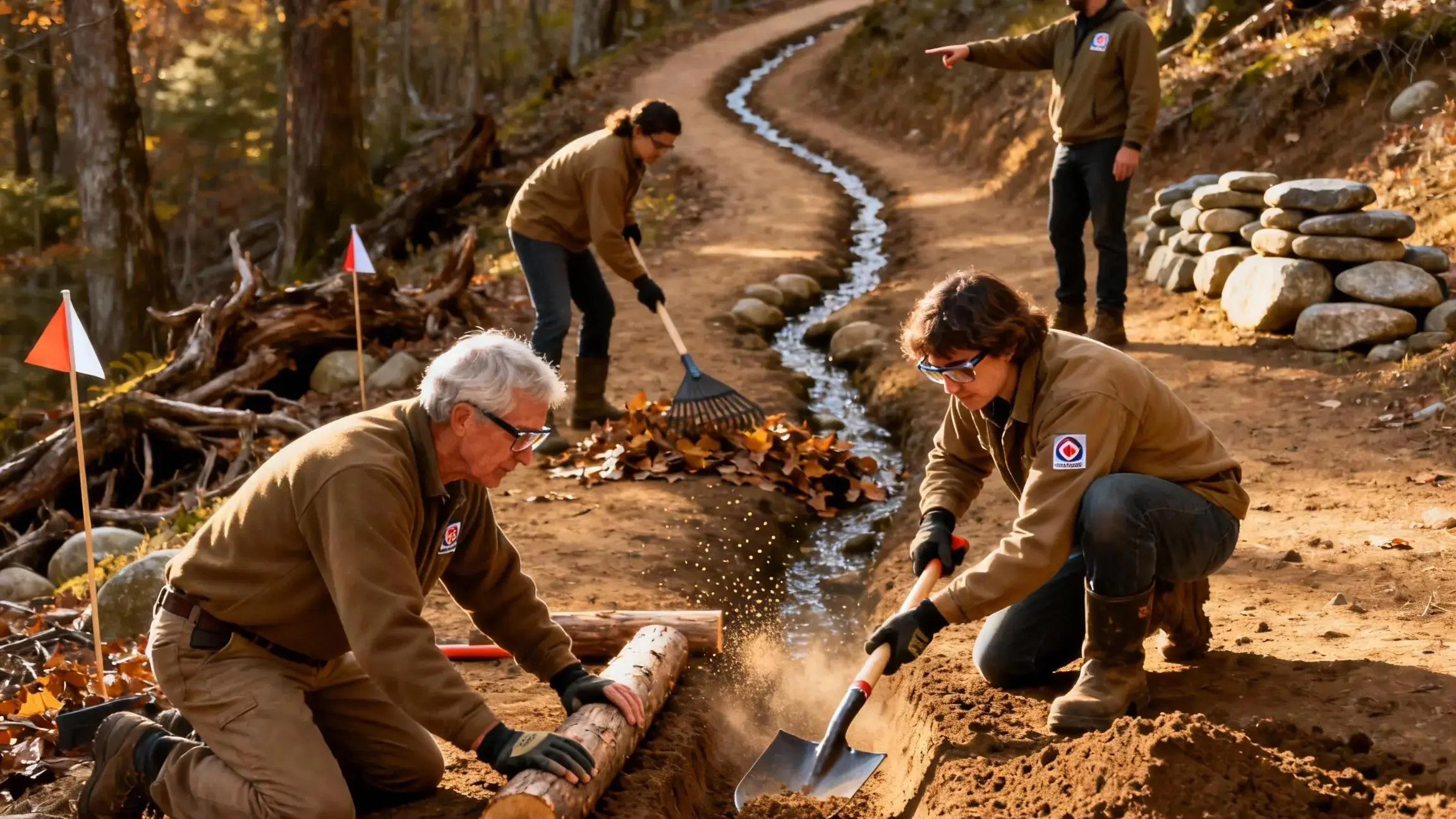
Trail volunteering is the fast track to visible, lasting change. Each hour of work helps keep public lands open, safe, and beautiful for everyone. If you thrive outside and want a tangible legacy, few projects are more direct.
Trail Crew Impact:
- Restores visitor access and safety by rebuilding tread and clearing drains.
- Prevents erosion and habitat loss using proven methods like Trail Drainage Features.
- Trains you in tools, tread design, and site-specific safety—no guesswork.
- Day-projects to season-long commitments, always adapted to key seasons.
- Your input feeds real-time data to managers for smarter maintenance, not just one-off repairs.
Trail work links every footprint to history, ecology, and community pride. Volunteers aren’t just extra labor. With orientation, you help collect and report monitoring data that shapes future conservation strategies. Partner with context-first leaders using protocols aligned with the National Park Service’s own standards. Results last.
Every maintained trail supports millions of visitors, protects endangered species, and preserves historical sites.
Keen to hike, fix, and make a real difference? Learn more: NPS Trails & Hiking
2. Global Ghost Gear Initiative Field Actions
Marine debris isn’t just ugly. Discarded gear is the top killer of ocean life—injuring, trapping, and killing animals unseen beneath the waves. Cleaning up ghost gear is direct, measurable, and urgent.
Real Results from Removal:
- Coastal removals have pulled thousands of pounds of gear per campaign, with results like 13,500 pounds cleared in Maine this year.
- Integrated projects use sonar, GoPro surveys, and local knowledge for efficient target cleanups.
- Volunteers help beyond the beach: ferry gear, enter survey data, run gear drives, and interview local fishers.
- Projects partner with fishers to prevent gear loss and create recycling solutions, not just repeat after-the-fact cleanups.
Global Ghost Gear Initiative taps collective action. Engagement works because everyone is part of the solution—from divers to data entry. Volunteering here means doing high-impact, system-level cleanup that stops the cycle of marine loss at its source.
Removing ghost gear saves wildlife, but connecting with local recovery efforts multiplies the effect for whole communities.
Take a look: Global Ghost Gear Initiative
3. MarineBio Conservation Society Beach Cleanups
Want an easy entry point? Beach cleanups deliver fast, visible wins for the ocean and its coastline communities. Organized events help you do more with your time, and the data you collect shapes smart changes upstream.
- Combine trash removal with real-time debris tracking that influences community policies and bans.
- Simple events but high return: weeks of trend data, new partnerships, immediate plastics out of the water.
- Perfect for families, first-timers, or anyone ready to move from concern to action.
- Join for a few hours or every month—each effort builds on the last.
When you choose cleanups that gather data, you double your impact. You protect habitats today and drive smarter waste management for tomorrow.
Start small, deliver results, and build a pattern of progress with each cleanup.
Learn more: Beach Cleanups
4. Post Fire Reforestation with US Forest Service
Post-fire landscapes can take decades to recover. Volunteers who plant strategically chosen trees cut that recovery time and kickstart healthier forests. Restoration works when planned with science and patience.
Why volunteer reforestation works:
- Boosts regrowth rates by up to 25 percent over natural recovery when done on the right sites.
- Survival rates increase 37 percent on north slopes and 20 percent with shade—every hour of volunteer effort multiplies results when applied strategically.
- Training covers everything: selecting sites, planting depth, post-planting care.
- Projects match your effort with evidence-based site monitoring. Follow-up is the key.
Think beyond numbers. You’re not just planting trees—you’re helping ecosystems survive wildfires, droughts, and changing climates.
Every tree you plant in the right place becomes a lasting part of a restored landscape.
[More info: USFS Reforestation](https://www.fs.usda.gov/managing-land/forest-management/vegetation-management/reforestation)
5. David Shepherd Wildlife Foundation Research and Monitoring Support
Field monitoring is the backbone of modern conservation. You help safeguard endangered species through verified data collection and support for anti-poaching patrols. Informed action means every hour of your time helps real animals, not just vague causes.
- Field monitoring uses camera traps, spoor counts, and habitat surveys to direct the highest value protection efforts.
- Volunteers with training deliver decision-ready results—no busywork.
- Projects focus on data and community engagement, not just tagging animals.
- You help build models and patrol maps that guide policy and protect keystone species.
Real-world conservation is results-driven. Volunteers who add to local teams, work ethically, and prioritize accountability deliver the strongest impact.
Data delivered responsibly puts every resource in the right place—and that saves entire species.
Learn more: David Shepherd Wildlife Foundation
6. Community Wildlife Site Monitoring with Plateau Wildlife
If you want your volunteer hours to drive smarter land care, site monitoring is the best route. By following systematic protocols and solid science, you help local managers track animals, habitats, and trends.
- Camera deployment, field surveys, and habitat recordings—your work builds a record that legally matters.
- All protocols, all training provided for meaningful, auditable data.
- Focus: Baseline records, occupancy trends, targeted species observations—always shared directly with decision-makers.
Community wildlife monitoring isn’t abstract—it shapes actual management plans and changes real land use. Your action? It matters on the ground.
Smart surveying now sets the standard for resilient land and thriving wildlife communities.
See how it works: Plateau Wildlife Monitoring
7. TeachingEnglish Volunteer Teaching and Conversation Clubs
Sharing English skills can transform access for youth, migrants, and job seekers—if you do it right. We advocate pitch-in learning, not parachute teaching.
What sets top programs apart:
- You co-plan sessions with local educators, support—not substitute.
- Use structured, expert-planned lessons for impact you can measure.
- Sessions deliver increases in student confidence and communication, never just passive listening.
- Safeguarding and cultural norms front and center.
Volunteer teaching, when done right, empowers local teachers and builds bridges. Bring your skills and be a partner, not a solo act.
Confident communication skills unlock opportunities. Conversation clubs deliver them, one session at a time.
Try it: TeachingEnglish
8. Medical Outreach Volunteer Nepal with Volunteers Initiative Nepal
Short-term volunteer healthcare can have a deep impact. That is, if there’s structure, orientation, respect for local leadership, and strict scope.
- Programs orient you to local norms, set safe scope, and offer constant support.
- Volunteers work side-by-side with host clinicians, providing triage, education, and systems help.
- Every task supports long-term health access or builds local health capacity—no heroics, just disciplined service.
- Community-led, transparent, and ethnical; see exactly how fees and hours support care.
Your work strengthens care and prevention for communities who need it most. The right structure protects both you and those you serve.
Empowered teams lead to sustainable health gains—every outreach project starts with respectful partnership.
Learn more or sign up: Medical Outreach Volunteer Nepal
9. Responsible Travel Community Project Placements
Community-first volunteering means being part of projects where your effort is wanted and directed by local leaders. You co-create impact, not just fill a slot. Responsible Travel placements focus on this model.
- Curated roles: From tree planting and renovations to water projects and education supports.
- Emphasis on transparency: You know where your fees go and how your work fits local plans.
- Options for all backgrounds—skilled, unskilled, first-timers.
- Impact gets measured in clear ways, like households reached or student outcomes.
- Every project is chosen by the community, ensuring real, ongoing benefits.
The best community projects start with community voices and are powered by hand-in-hand volunteering.
See more: Responsible Travel placements
10. Volunteer Forever Short Term Programs and Mission Trips
Short travel volunteer stints don’t have to mean small impact. The right mission trip fits your skills to local needs and delivers tangible outcomes, even in a week.
- Each program provides pre-departure orientation and role-specific training.
- Effective as a family, solo, or group activity.
- Real results: Short-term volunteers support things like surveys, surveys, or school holiday programs—work with a clear end product.
- Look for programs that show what previous volunteers accomplished, not just how many showed up.
Short breaks matter when they are structured, accountable, and add value rather than filling time.
You can do a lot in a week if you join an impact-driven team with a clear plan.
Check out: Volunteer Forever
11. Team London Ambassadors at Major Events
If you like people, fast-paced energy, and high stakes, volunteering as an event ambassador puts your people skills to work right away. This is on-the-ground, real-time help.
- Roles supporting celebrated events and city festivals, welcoming thousands.
- Get trained, backed up, and always have team support.
- Tasks range from accessibility help to hospitality and information to wayfinding.
- Hours are flexible; contribute as your schedule allows.
Volunteering at events builds local pride and experience you can bring anywhere.
Every greeted guest or festival attendee enjoys a better experience, thanks to you.
Join up: Team London Ambassadors
12. Festival International de Louisiane On the Ground Volunteers
Jump into the action behind the scenes at a high-energy festival. Duties could be artist hospitality, green teams, or logistical support—never dull, always appreciated.
- Roles posted in advance with clear online sign-up and status checks.
- Projects range from recycling shifts to artist transport coordination.
- One event can have measurable impact, from reduced waste to increased artist support.
- Perfect for anyone wanting cultural immersion plus direct results.
You feel the festival energy and see your contribution pay off in real time.
Festivals run on the heart and hustle of volunteers—your work keeps everything moving.
Learn more: Festival International
13. Community Water and Sanitation Field Projects Guided by World Bank Manuals
Water and sanitation volunteering is much more than construction. Real impact lasts when you follow proven methods and deliver projects that work for the long haul.
- Support WASH projects using globally respected field manuals and local leadership.
- Tasks include technical help, community mobilization, and operator training.
- Work tracked by system uptime, household coverage, and true sustainability.
- Help gather baseline data or translate manuals so operators can keep systems running long after you go.
Ethical water volunteering protects health, dignity, and future community growth.
Lifelong impact comes from building capacity, not just pouring concrete.
See [the resources: Sanitation Manual](https://documents.worldbank.org/en/publication/documents-reports/documentdetail/387281468766792335)
14. Agroecology Farm Stays and Community Food System Projects
Agroecology means farming for nature and people. As a volunteer, you get your hands dirty alongside local growers, learning and helping with biodiversity, soil, and food security work that lasts.
- Work in the field, helping with crop trials or biodiversity counts.
- Support farmers as they test new methods and build resilient local food networks.
- Every day delivers measurable changes: richer soil, more species, fairer trade.
- Direct exchange of knowledge; mutual learning, not just labor.
Agroecology farm stays let you contribute to a world where food systems are fair and future-proof.
Every weed pulled, seed sown, or survey done powers a more resilient food future.
Learn more: FAO Agroecology
How to Choose Ethical Travel Volunteer Opportunities That Truly Help
It’s easy to get lost in a sea of options. Here’s how to cut through noise and find travel volunteer opportunities that match your drive for impact—not just good intentions.
Key Criteria for Impact
- Skill fit: Map your abilities to roles that communities genuinely request. Pick tasks where you support, not displace, locals.
- Transparency: Evaluate how organizations report outcomes, not just hours.
- Safety and training: Know the onboarding steps, cultural briefings, and practical supports available before you commit.
- Duration: Love short-term? Anchor efforts in existing local projects. Long-term? Go deep on research or skills-based help.
- Measurables: Pick programs where you’ll leave a visible mark—miles of trail, trees planted, kids actually learning.
Lasting impact grows through strong local partnerships, discipline, and honest self-assessment.
Why Peer-to-Peer Service with Gathr Stands Out
Direct, peer-to-peer opportunities put you at the center of positive change on your schedule. With Gathr, you can offer or request help globally, from streetside cleanups to classroom coaching. Whether you want to create a new project or join an existing one, you find practical ways to build kindness into your travels.
We keep service human-scale. Each small act ripples locally and globally.
Looking for a way to get involved in your community?
Check out Gathr — a new app that makes it easy to find volunteer opportunities anywhere.
Find Opportunities →Conclusion
Small, specific actions drive real change. Whether you’re clearing a park trail, supporting a farmer, or helping at a festival booth, your presence matters. The world needs more people who see a need—and step up, even on the road. Start today, use Gathr to deepen the impact, and make every trip a story of kindness, learning, and connection.