
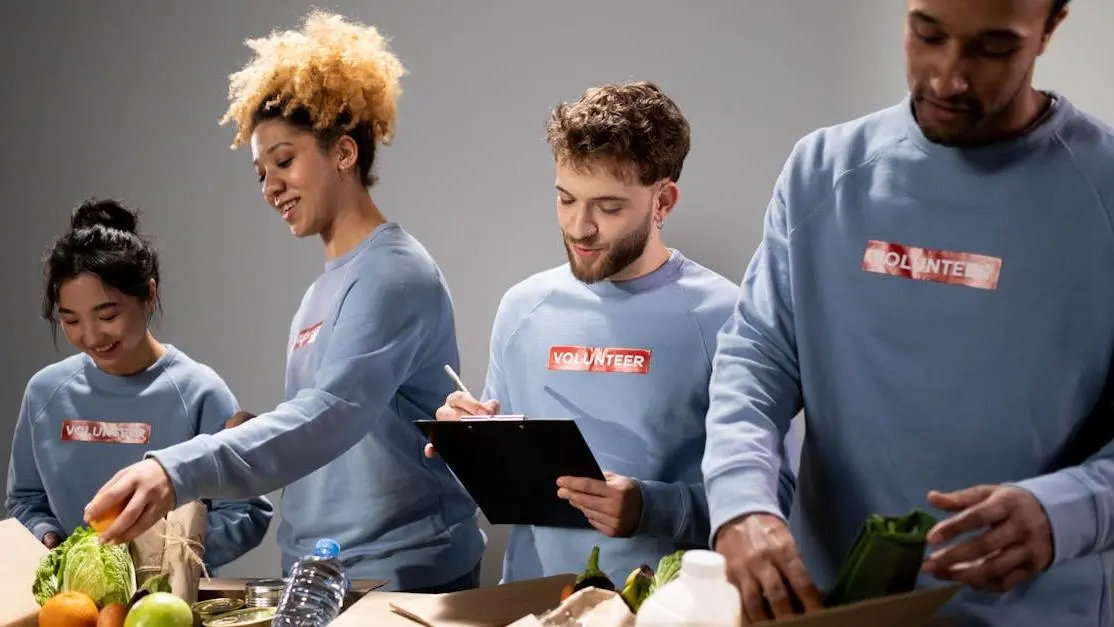
When you volunteer at food bank organizations, you play a direct role in helping neighbors facing food insecurity—a challenge experienced by millions each year.
It’s normal to wonder what impact you can make or where to start.
We’ve created a practical guide that covers:
- What to expect when you volunteer at food bank locations and how your time creates change
- The rise of peer-to-peer connections that make volunteering flexible, social, and local
- Real ways to get involved, from hands-on shifts to remote opportunities for any schedule
Understand What It Means to Volunteer at Food Bank
Stepping up to volunteer at a food bank means one thing: you’re moving the needle on hunger. Every hour helps. You sort, pack, distribute, organize, or support behind the scenes so real people can feed their families with dignity. Food banks exist because families in your city go hungry every day. Your effort is critical.
Key ways volunteers make an impact:
- Sort donated food—making sure only safe, nutritious items reach tables. This keeps thousands of pounds of food from going to waste.
- Pack meal boxes—every well-packed parcel serves a family struggling to get by. Hundreds of meals get created in a single shift.
- Distribute resources at pick-up events or pantries—putting food directly in the hands of neighbors. You see the gratitude and relief firsthand.
- Organize drives or support admin tasks—essential for improving efficiency so no one falls through the cracks. Your small task could connect a hungry child to a week’s worth of school lunches.
Volunteering is about real-world results, not feel-good slogans. Food banks depend on consistent, community-driven support. Recent stats show that demand is up. If you want proof your time matters, here it is: every volunteer amplifies how much food gets moved to families in need, fast.
Hundreds of meals start with one hour of your time.
Why Choose Peer-to-Peer Volunteering and Modern Platforms
You want to know your help matters. You want to see the difference your effort makes. Peer-to-peer volunteering is all about that direct connection. It’s flexible, authentic, and focused on real impact.
Here’s where Gathr comes in. We built our platform to make volunteering more personal, more immediate, and less buried in red tape. With Gathr, you join food bank shifts close to home, side by side with neighbors who care as much as you do. This isn’t a mass volunteer repository. It’s peer-powered, and you see the results up close.
Why peer-to-peer platforms (like Gathr) win:
- Flexible scheduling—sign up for shifts that work for your life, not the other way around. We saw user engagement skyrocket when volunteers got to choose their own adventure.
- Personal connection—work with people in your zip code. Build genuine community, not just ticking boxes.
- Instant matching—skills and interests align with urgent needs. Our app uses your profile to connect you where your help lands the hardest punch.
- Accountability—fast feedback, community ratings, and real stories build trust. Transparency isn’t a buzzword here; it’s the rule.
- Skill utilization—find roles that use your strengths, whether you’re a logistics whiz or a social butterfly. Your unique value shines through.
Peer-to-peer isn’t just a trend. It’s a smarter way to serve and make your presence count. And with Gathr, you’re not just another name on a list. You’re a local force for good.
Identify Your Motivations and the Impact You Want to Make
Step one: know what fuels you. Why do you want to volunteer? Are you here to give back, learn something new, or show up for people who deserve better? Your why drives your impact.
Food banks deliver more than meals. When you join, you:
- Connect with others who care. Many volunteers build friendships and find belonging they didn’t expect.
- Slash food waste—food that would hit the landfill ends up on dinner tables. This is carbon saving you can measure.
- Grow your skills. People who start on sorting tables often move up—leading teams, training others, even shaping advocacy efforts.
Even a single shift matters. Your presence means a shelf stays stocked, a meal box goes out, and a family breathes easier tonight.
One person’s small commitment can become a lifeline for hundreds.
Learn About the Different Ways You Can Volunteer at Food Bank
You have options—plenty. Food banks need many hands, skills, and personalities. Your best fit depends on time, comfort, and what you want to bring to the table.
Volunteer roles with real-world impact:
- Sorting and packing—hands-on, active, and ideal for those who thrive with clear tasks.
- Food rescue—pick up donations from supermarkets. Perfect for reliable drivers who want to be the critical link between donor and recipient.
- Guest intake and check-in—help visitors, gather information, or support registration. If you enjoy meeting new people, this suits you.
- Deliver meals—essential for reaching those without transportation or with mobility challenges.
- Admin and virtual support—data entry, grant writing, or social media. Great for anyone with desk skills who wants to work from home.
Most food banks welcome families and groups. Some roles have age or mobility requirements, but there is nearly always an option that fits your schedule and ability, including virtual volunteering.
Take the First Steps: How to Sign Up and Get Matched
Ready to get started? Good. Action beats intention every time. You can get matched to a food bank shift in just a few minutes with the right digital tools.
Gathr makes finding and joining local food bank opportunities simple:
- Browse shifts in your area—see times, locations, and required skills right on your phone or desktop.
- Create a profile—list your strengths, interests, and availability. Gathr uses this to match you where you’ll have the most impact.
- Apply online—food banks give you clear next steps. Most keep orientation simple and provide all needed training.
- Set reminders—during peak times, sign up early to reserve your spot. Gathr can nudge you when popular shifts open.
- Ask questions—reach out within the app or directly to the food bank if you want clarity before you start.
The sooner you schedule a shift, the sooner real help reaches families in your area.
Getting involved today means meals delivered tomorrow. There’s no better time to turn action into impact.
Know What to Expect When You Volunteer at Food Bank
Showing up is the turning point. Your first shift at a food bank is practical, energizing, and focused. You’ll meet staff and other volunteers, get a quick orientation, and then dive in. Most food banks have efficient routines that help you contribute right away.
Safety and teamwork matter. Expect a briefing on food handling, protocols, and, if needed, up-to-date health guidelines. Gloves, masks, and cleanliness are non-negotiable. You might lift boxes, greet guests, sort food, or prep bags for pickup.
Every shift builds skills—organization, teamwork, time management—you use in every part of life.
Here’s what you’ll experience: – You’ll work with a supportive crew, often pairing up with seasoned volunteers who answer questions and show you the ropes. – Most tasks are active, but breaks and check-ins keep things moving. There’s no room for standing around. – Volunteers rotate jobs, so there’s always something new. You won’t get stuck in a rut. – You’ll see the direct line between your effort and the well-being of others.
If you’re ever unsure, ask questions. Every food bank values curiosity and initiative.
Maximize Your Experience and Make Lasting Impact
Want a powerful volunteer experience? Small actions drive big results. Arrive early. Dress for comfort and utility. Pay attention and stay flexible when needs shift.
Level up by bringing a friend or family member. Shared experiences strengthen bonds and motivate you to keep showing up. If you enjoyed your shift, try different roles or ask about ongoing projects.
How to maximize every hour: – Be on time and ready. Reliable volunteers are the backbone of every operation. – Connect with others. Great things happen when you build relationships while serving. – Share your impact. Stories and photos fuel awareness and inspire your network to join in. – Volunteer regularly. Consistency has exponential returns for your skills, community, and confidence. – Branch out into advocacy. Help organize drives, create social content, or propose new ideas.
Volunteering delivers a double win: your help changes lives, and you unlock new purpose, skills, and friendships.
Overcome Barriers and Common Concerns
Doubts? Let’s squash them. Most new volunteers worry about time, skills, or starting solo. The truth: everyone fits somewhere.
You don’t need special training. Key tasks are explained in minutes and most food banks have shifts at night or on weekends. Prefer remote work? Data entry, fundraising, or virtual food drives mean you can support from your own space.
There’s a place for every schedule, skill set, and personality at your local food bank.
Quick solutions: – Not much time? Even single shifts matter. Choose shorter slots when needed. – Anxious about new people? Many food banks pair first-timers with a buddy. – Unsure about heavy lifting or logistics? Ask for tasks that fit your comfort zone. – Need flexibility? Gathr highlights virtual or specialized roles you can do from anywhere.
Don’t let doubts stop you from stepping in.
Frequently Asked Questions About How to Volunteer at Food Bank
You want answers? We have them. Here’s what most new volunteers ask:
- How old do you have to be? Most food banks require on-site volunteers to be 12–16 or older, but some allow younger kids with adults. There’s often work-from-home or virtual options for all ages.
- What should I wear? Closed-toe shoes, comfortable clothes, and tie back long hair. Gloves and aprons get provided on site as needed. Dress for action, not fashion.
- Can I bring friends or family? Absolutely. Most food banks offer group opportunities and even shifts designed for families.
- Do I need experience? No. You’ll get orientation and ongoing support.
- Is it safe? Food banks follow strict protocols for food handling, hygiene, and visitor safety. Health measures such as masks or temperature checks are common during outbreaks.
- Can I help just once? Yes. One-time and occasional volunteers are always needed.
For extra guidance, our Gathr app lets you see requirements on each opportunity—no surprises, just clear steps.
Reflect on the Broader Impact of Volunteering at Food Bank
Hunger is a local and global issue. Food banks fight on the front line, but their reach depends on volunteers like you. Your actions build resilience in your neighborhood and set new standards for kindness.
Every hour is a direct investment in someone’s health, hope, and dignity. Volunteers enable food banks to reach millions and keep nutritious food flowing to those who need it most. This isn’t theory; last year, collective volunteer hours helped deliver over 6 billion meals in the U.S. alone.
Every act of service ripples out—building up families, communities, and futures.
Your momentum inspires change, proves solutions work, and creates new opportunities for impact.
Conclusion: Take Action and Join the Movement
You’re ready. You have clear steps. You know how much your effort matters.
Why wait? Browse food bank opportunities on Gathr, offer or request help, and step into a community that’s changing lives every single day. One shift, one hour, one person—that’s all it takes to start.
We’ll match you to local needs, provide the tools, and celebrate your impact. Whether you’re looking for a single event or a new way to serve often, there’s a spot for you.
Make your move. The fight against hunger needs your hands, your heart, and your help—right now.